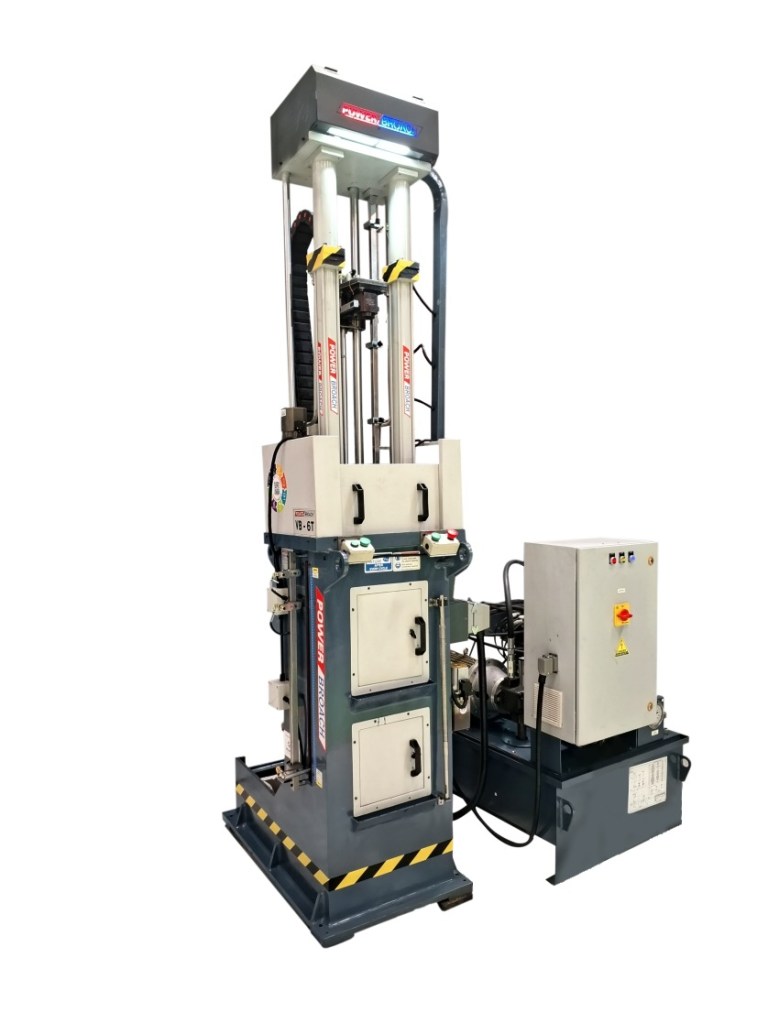
A broaching machine is a specialized piece of industrial equipment used to remove material with a toothed tool known as a broach. It operates by pushing or pulling the broach over the workpiece surface or through an internal section to cut a desired shape. Broaching is a precision machining process capable of producing complex profiles with excellent surface finishes and tight tolerances.
In this article, we’ll explore how broaching machines work, the various types available, their advantages, and the common industries and applications that rely on this essential machining process.
How a Broaching Machine Works
The core principle behind a broaching machine is the movement of a broach tool across or through a workpiece in a single pass. The broach contains a series of teeth that progressively remove material, each tooth slightly deeper than the previous one.
The operation can be broken down into three primary stages:
- Roughing: The first teeth of the broach remove the bulk of the material.
- Semi-finishing: Middle teeth continue refining the shape.
- Finishing: Final teeth smooth the surface and reach the required dimensions.
Depending on the application, the broach is either pulled or pushed, and the motion may be horizontal or vertical.
Types of Broaching Machines
There are several types of broaching machines designed for specific tasks and part geometries. Here’s a breakdown of the main categories:
1. Horizontal Broaching Machine
In this design, the broach moves horizontally across or through the workpiece. These machines are ideal for longer workpieces or parts requiring external cuts. They often have a long bed and can be either pull-type or push-type.
Applications:
- Keyways
- Splines
- External flat surfaces
2. Vertical Broaching Machine
Vertical machines move the broach up or down. They occupy less floor space and are often used for internal broaching tasks such as hole shaping or cutting internal keyways.
Applications:
- Internal hexagonal holes
- Round to square hole conversion
- Keyway broaching
3. Rotary Broaching Machine
Also known as wobble broaching, this type rotates the broach tool slightly while pressing it into the workpiece. It is commonly used in lathes or CNC machines and is suitable for small precision parts.
Applications:
- Medical components
- Aerospace fasteners
- Gear manufacturing
4. Continuous Broaching Machine
These are automated machines where the workpiece is fed continuously, and the broach is fixed. It’s ideal for high-volume production.
Applications:
- Automotive parts
- Long profiles
- High-speed operations
Advantages of Using a Broaching Machine
Using a broaching machine offers several benefits that make it valuable in modern manufacturing environments:
- High Precision: Delivers tight tolerances and fine finishes.
- Speed: Single-pass operation results in rapid material removal.
- Repeatability: Excellent for mass production with consistent results.
- Complex Shapes: Capable of forming irregular and non-circular internal and external profiles.
- Automation Friendly: Easily integrated into automated production lines.
Key Components of a Broaching Machine
A typical broaching machine consists of the following essential parts:
- Broach Tool: The cutting element with teeth arranged to remove material step-by-step.
- Ram or Slide: Drives the broach forward or backward.
- Work Holding Fixture: Secures the workpiece during operation.
- Drive Mechanism: Can be hydraulic, mechanical, or electro-mechanical depending on the model.
- Support Systems: Include coolant supply, lubrication, and chip removal systems.
Materials That Can Be Broached
Broaching machines are versatile and can cut through a variety of materials. However, the effectiveness depends on the hardness and machinability of the material.
Commonly Broached Materials:
- Mild steel
- Stainless steel
- Aluminum
- Brass
- Titanium (with limitations)
- Plastics and composites (in some cases)
Generally, softer to medium-hard metals offer better results and longer tool life.
Broaching vs. Other Machining Processes
Let’s briefly compare broaching to some other common machining techniques:
| Process | Speed | Precision | Complex Profiles | Volume Suitability |
| Broaching | High | Very High | Excellent | Best for high volume |
| Milling | Medium | High | Moderate | Low to medium volume |
| Grinding | Low | Very High | Limited | Low to medium volume |
| Drilling | High | Moderate | Poor | High volume |
Broaching is not ideal for one-off or low-volume jobs due to the cost of broach tools, but it is unmatched in high-volume, high-precision applications.
Common Applications of Broaching Machines
Broaching machines are widely used in various industries, including:
1. Automotive Industry
Broaching is used to cut keyways, gears, splines, and transmission components. The speed and accuracy of broaching make it suitable for large-scale production of parts that require tight tolerances.
2. Aerospace Sector
Rotary broaching creates intricate fasteners and structural parts with non-circular cross-sections, such as hex or torx shapes.
3. Heavy Equipment Manufacturing
Broaching machines help create robust parts used in construction, agriculture, and mining equipment, particularly in drivetrain and hydraulic components.
4. Medical Equipment
Precision broaching machines are used for producing implants, surgical tools, and other components where tight tolerance is crucial.
5. Tool and Die Industry
Custom shapes and internal profiles needed in dies and molds are often made using internal broaching.
Limitations of Broaching Machines
Despite their many advantages, broaching machines also come with a few limitations:
- High Tooling Cost: Broach tools are expensive to manufacture and sharpen.
- Limited Flexibility: A broach is designed for a specific shape; changes in design require a new tool.
- Not Ideal for Low Volume: Due to high tooling costs, broaching isn’t economical for small-batch production.
- Space Requirement: Horizontal machines in particular can occupy large areas.
Maintenance and Safety Tips
Proper maintenance ensures the longevity and safety of a broaching machine:
- Regularly inspect broach teeth for wear or damage.
- Keep hydraulic systems clean and properly lubricated.
- Check alignment of fixtures and slides.
- Use safety guards and train operators to avoid contact with moving parts.
Routine preventive maintenance will reduce downtime and extend the life of both the machine and the broach tools.
Conclusion
The broaching machine is a powerful asset in precision machining, especially in industries that require consistent, high-volume production of complex profiles. Its ability to deliver tight tolerances and excellent surface finishes in a single pass makes it a preferred choice in manufacturing environments where quality and efficiency are essential.
While the initial investment in tooling and equipment may be high, the long-term productivity and cost savings make broaching machines indispensable for many sectors. When used and maintained correctly, these machines can significantly enhance manufacturing capabilities and product quality.
Whether you’re manufacturing automotive components or medical devices, a well-chosen broaching machine can elevate your production process with accuracy, speed, and reliability.
 Site Title
Leave a comment